

Focusing on Learning Transformation in the AI Era – Our College Coorganises the 15th International Workshop on Knowledge Management and Digital Learning
 Jun 15, 2026


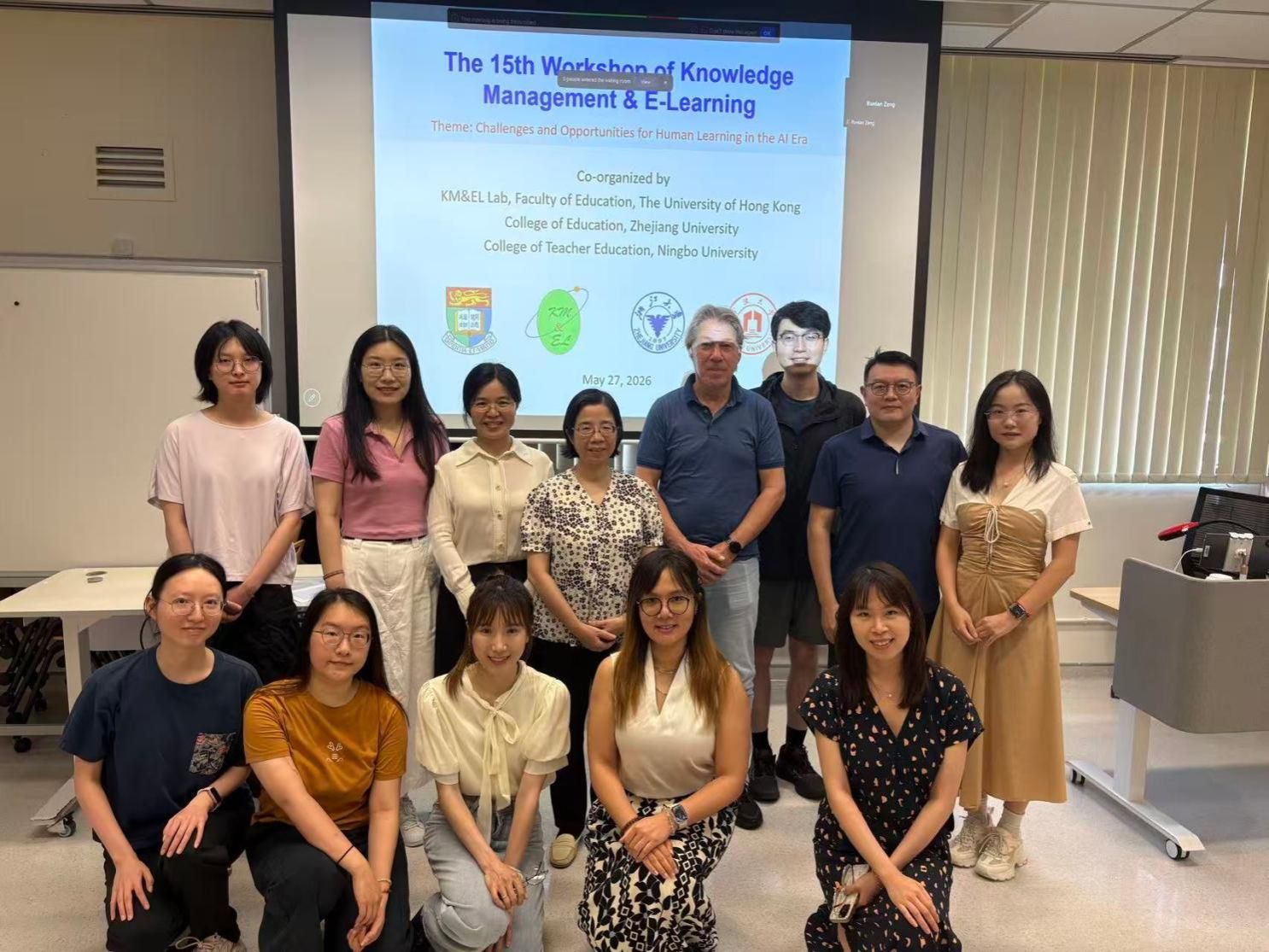
Recently, the 15th International Workshop on Knowledge Management and Digital Learning (KM&EL) was successfully held. Themed “Opportunities and Challenges for Human Learning in the Age of Artificial Intelligence,” the event was cohosted by the University of Hong Kong, Zhejiang University, and Ningbo University, with the College of Teacher Education, Ningbo University, serving as a core organising unit and participating throughout the preparation process. The workshop adopted a hybrid format combining online and offline participation, attracting over 300 experts, scholars, teachers, and students from home and abroad. Bringing together leading minds from the fields of education, educational technology, cognitive science, and related disciplines, the workshop facilitated indepth discussions on cuttingedge topics such as AIempowered educational development and digital learning transformation, building a highlevel international academic exchange platform.
As a coorganiser of this workshop, the College of Teacher Education, Ningbo University, has long been engaged in teacher education, educational technology, digital teaching reform, and related areas, and actively promotes the internationalisation of its disciplines and crossregional academic cooperation. Leveraging the university’s strengths in education, the College continuously focuses on innovative educational practices in the context of AI and digital transformation, while strengthening exchanges and collaboration with renowned universities and research institutions both domestically and internationally. Hosting this international workshop not only provided an important opportunity for the College to broaden its international academic horizons and engage with frontier research hotspots, but also further enhanced its academic influence in the fields of educational technology and intelligent education.
The workshop featured two main discussion sessions, with participants joining either via the Zoom online platform or inperson at the Shaw Building of the University of Hong Kong, creating a rich academic atmosphere throughout.
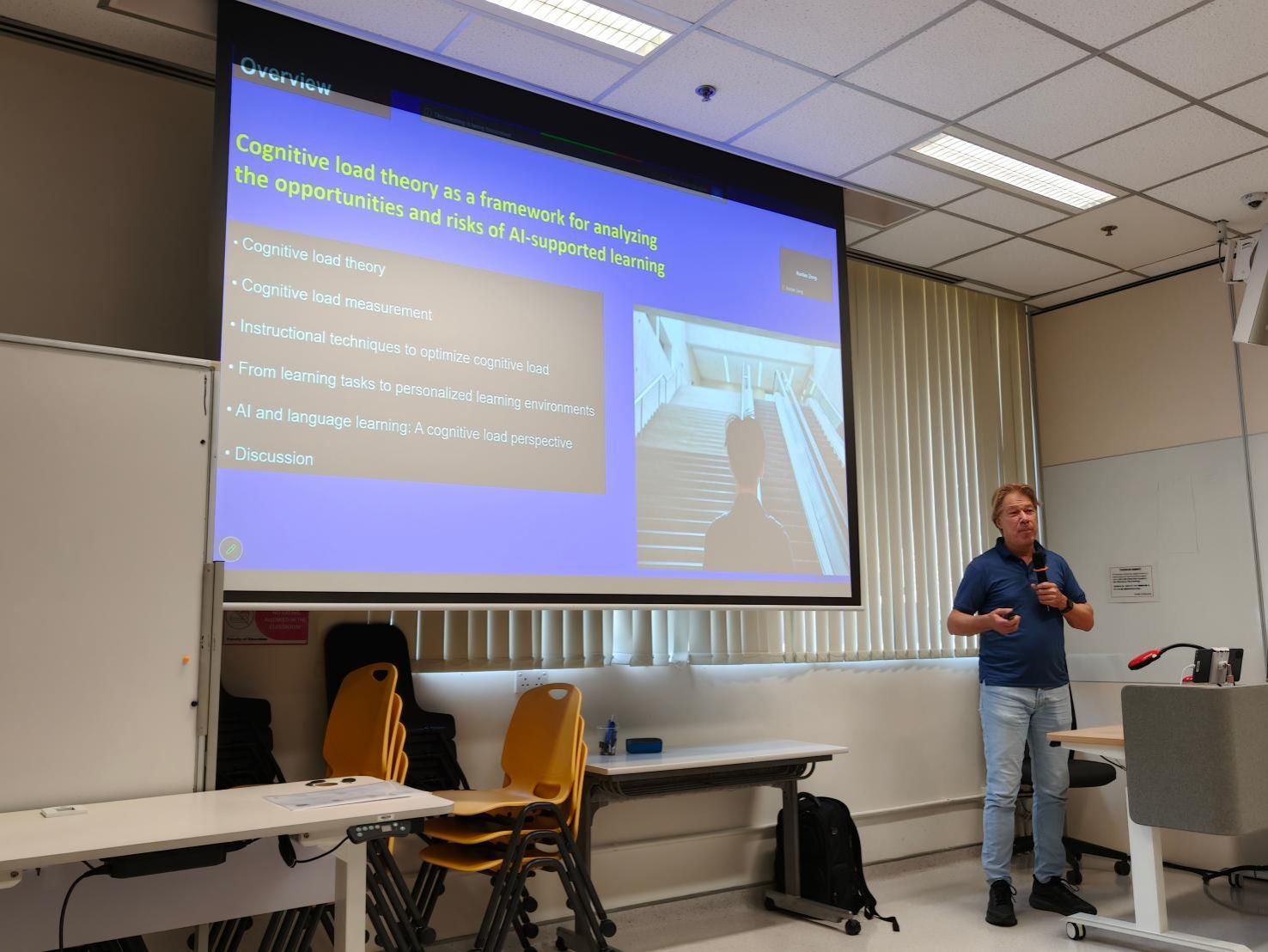
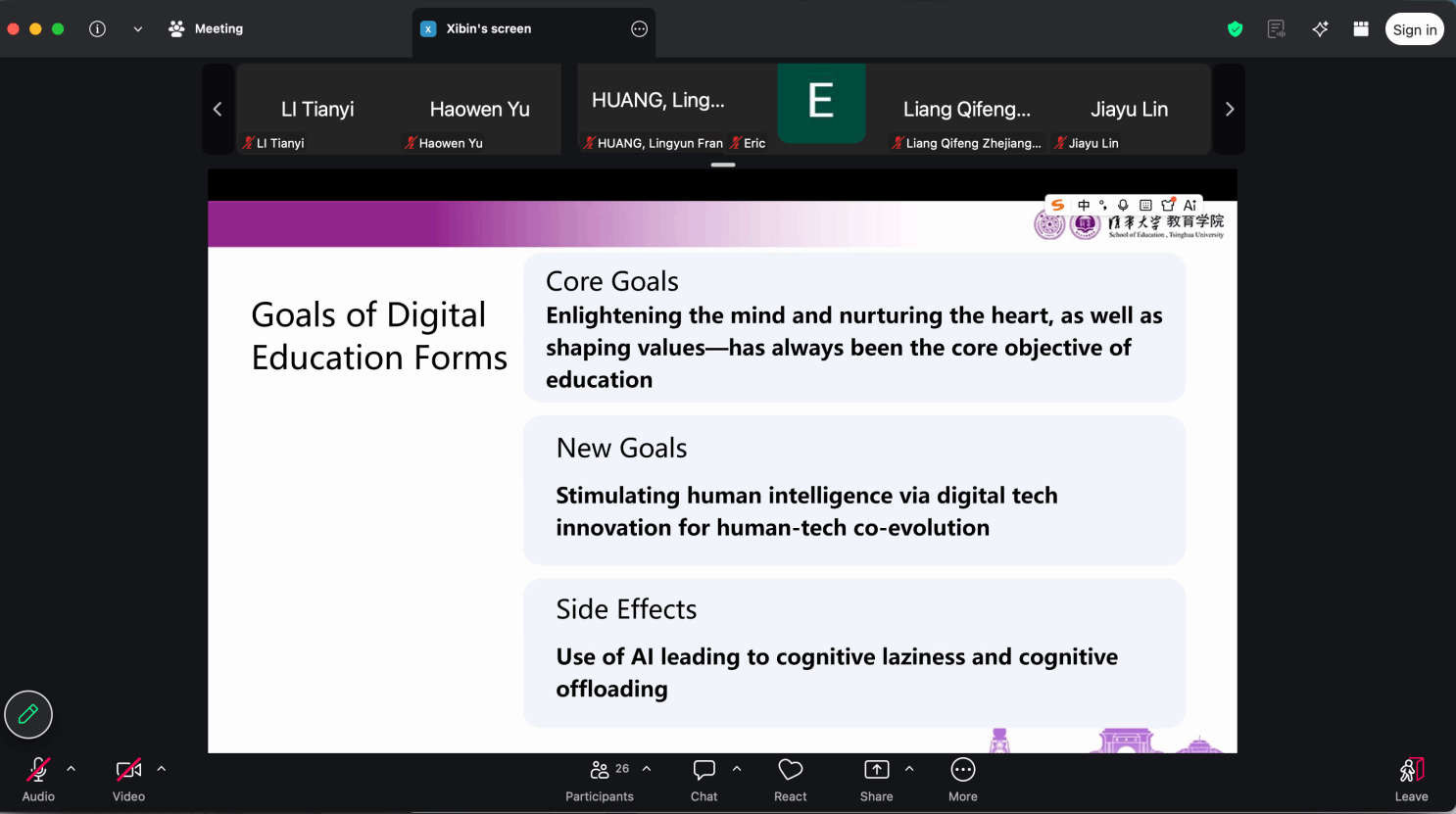
During the morning keynote session, several distinguished scholars shared their cuttingedge perspectives. Professor Han Xibin from Tsinghua University, from a morphological perspective, constructed a threedimensional analytical framework to explore the classification, value, and development directions of digital education forms. Professor Qiao Xiaochun from Peking University analysed the application value of large language models in education and research, while also addressing various practical challenges such as academic integrity, technical bias, and copyright attribution, clarifying the instrumental nature of AI. The afternoon hybrid session was equally vibrant. Professor Wang Minhong first reviewed the eighteenyear development of the Knowledge Management and Digital Learning Laboratory at the University of Hong Kong. Professor Fred Paas from Erasmus University Rotterdam, drawing on cognitive load theory and embodied cognition theory, examined the advantages and potential pitfalls of AIenhanced learning, and proposed design ideas for intelligent systems in language education. Subsequently, Professor Wang Minhong, drawing on her team’s research findings, elaborated on the opportunities, challenges, and future directions for human learning in the AI era.
Participating scholars agreed that the workshop addressed cuttingedge topics with substantial content, accurately capturing the pulse of AIempowered educational transformation, and providing an excellent platform for educational researchers worldwide to exchange ideas and share experiences. Looking ahead, the College of Teacher Education, Ningbo University, will continue to position itself at the forefront of educational development, deepen international academic exchanges and research collaboration, actively explore theoretical and practical pathways for the deep integration of AI and education, contribute to the highquality development of teacher education in the new era, and advance academic contributions to the innovative development of intelligent education.
【Close 】



