

Fenghua Scholars Young Scholars Forum (Session 10): Norwegian Expert Decodes Mathematics Learning Motivation to Empower Local Teaching Practice
 Jun 5, 2026


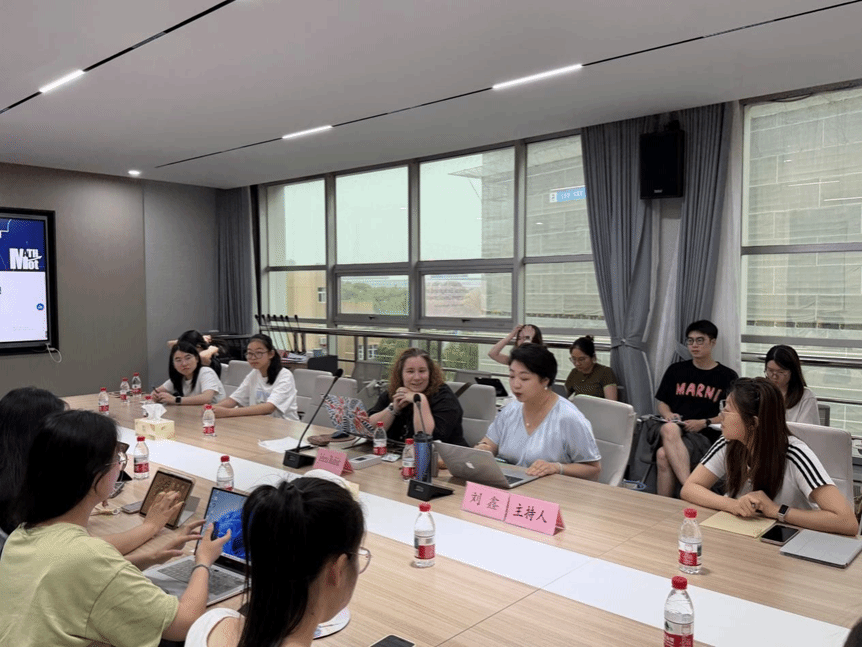
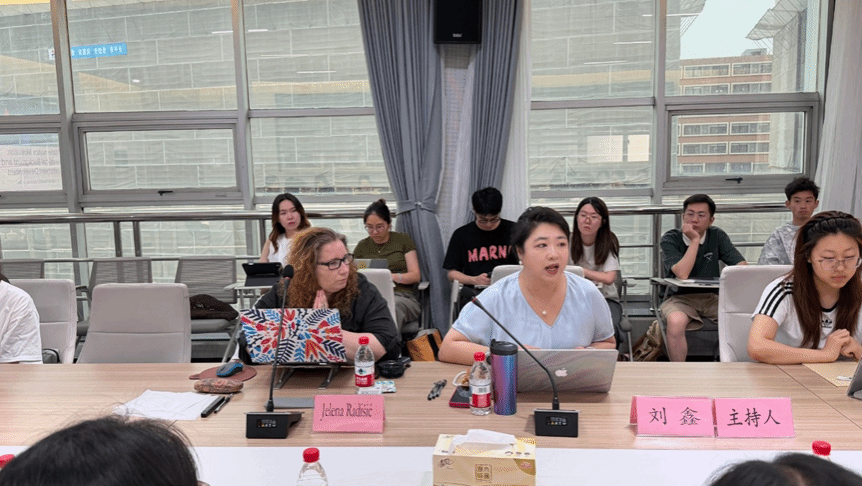
To build a bridge for international academic exchange and to promote the deep integration of cutting‑edge research in mathematics education with local practice, the College of Teacher Education, Ningbo University, recently held the 10th session of the Fenghua Scholars Young Scholars Forum. The session featured a special lecture by Dr. Jelena Radišić, Senior Researcher at the Department of Teacher Education and School Research, University of Oslo, Norway, on the theme “Mathematics Learning Motivation, Development, and Learning Outcomes: Research and Practice.” The event was moderated by Associate Professor Liu Xin, Director of the College’s International Office, and was attended by frontline teachers from Zhenhai District as well as faculty and students from Ningbo University, all coming together to explore pathways for improving mathematics education.
Dr. Radišić has worked for many years at the intersection of education, psychology, and mathematics education. She serves as Associate Editor of the SSCI journal European Journal of Psychology of Education and is the Principal Investigator of the major Norwegian national project “Building Mathematics Motivation in Primary School: A Six‑Country Longitudinal Study in Europe” (MAPMOT). Funded by the Research Council of Norway with a budget of €1.2 million (approximately 11 million RMB), the project brings together research teams from Norway, Sweden, Finland, Serbia, Estonia, and Portugal. Over four years (2020‑2024), it tracked more than 11,000 students in grades 3‑5 across 287 schools in the six countries, systematically investigating the effects of classrooms, teachers, parents, schools, and education systems on students’ mathematics learning motivation, emotions, subject identity, and academic outcomes. To date, the project has produced 18 high‑level papers and book chapters, with substantial findings.
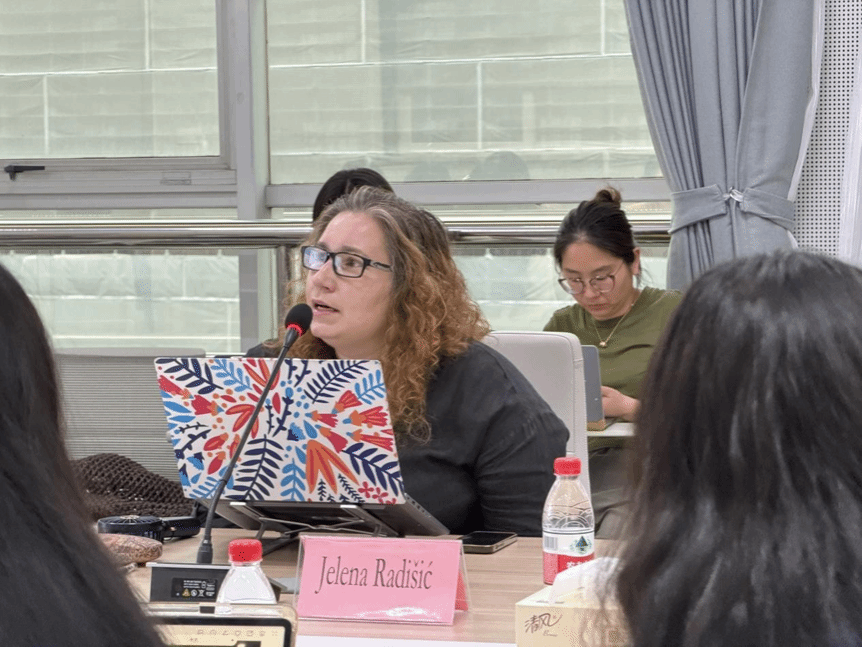
The lecture was structured in a coherent, progressive manner and was rich in content. It opened with an overview of the theoretical framework and the development of measurement tools for mathematics motivation. Dr. Radišić elaborated on the core logic of the research. Using Expectancy‑Value Theory (EVT) and Control‑Value Theory (CVT) as the main theoretical pillars, she constructed a motivation model encompassing five dimensions: intrinsic value, utility value, attainment value, cost, and perceived competence. At the same time, key indicators such as academic emotions (enjoyment, anxiety, boredom), mathematics identity, academic self‑confidence, and perceived home‑school support were incorporated to comprehensively depict the psychological characteristics of primary school students in mathematics learning. Given the cognitive characteristics of young children, the team developed simplified measurement scales adapted to multiple cultural contexts, using neutral emoticon illustrations, colloquial wording, and bilingual translation‑back‑translation procedures to ensure scientific validity, cross‑cultural consistency, and practical applicability, thus providing a standardised tool for global research on primary mathematics motivation.
In the following segment, Dr. Radišić presented in detail the findings from the six‑country survey, comparisons of national education systems, and the translation of research results into teaching practice. She compared the differences among the six education systems: Nordic countries (grades 4‑5) employ a generalist teacher system, while Portugal and Serbia gradually transition to subject‑specialist teaching; Estonia’s teaching model is more flexible. These different educational models produced markedly different developmental trajectories in students’ mathematics motivation. She pointed out that primary students’ mathematics learning motivation tends to decline as grade levels increase, and that positive academic emotions, a clear mathematics identity, precise teacher encouragement, and positive family guidance are key to slowing this decline and improving learning outcomes. Based on the research data, the team distilled teaching strategies adaptable to different educational settings, producing interview guides for teachers and students, and practical teaching guides, offering actionable and replicable solutions for frontline instruction.
The interactive session was lively, with participants discussing local teaching challenges in depth. Frontline teachers raised questions on core issues such as “cultivating primary students’ confidence in mathematics,” “the weakening of mathematics learning contexts in the era of mobile payment and AI,” “avoiding mechanical drilling and stimulating interest in mathematics,” and “home‑school collaborative pathways for student development.” Dr. Radišić offered targeted recommendations based on European research experience and the realities of Chinese education: avoid a one‑size‑fits‑all requirement that all students love mathematics; instead, prioritise fostering practical awareness of mathematics; uncover mathematical elements in everyday life scenarios to show students that numbers are everywhere; maintain consensus between teachers and parents, reinforcing positive incentives through small progress steps; and make good use of technological tools to support instruction rather than replace thinking training, so that AI becomes an aid to mathematical thinking rather than a hindrance.
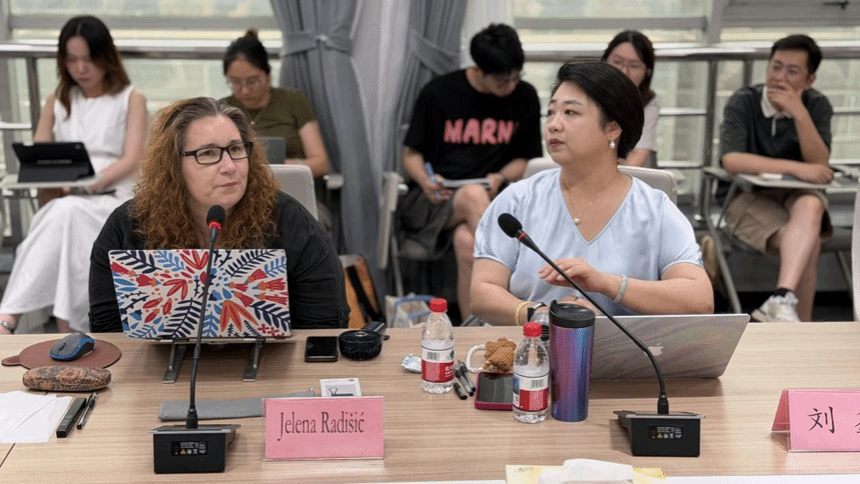
In his concluding remarks, Associate Professor Liu Xin noted that the forum provided an excellent platform for in‑depth dialogue between Chinese and European mathematics education communities. The cutting‑edge research findings, rigorous methodologies, and mature practical experiences shared by Dr. Radišić offer fresh perspectives for domestic research on primary mathematics motivation and the cultivation of students’ core competencies. Looking ahead, the College of Teacher Education, Ningbo University, will continue to deepen international cooperation, working with frontline educators in China to promote the deep integration of international research insights with local educational practice, and to conduct contextualised studies on mathematics learning motivation and academic emotions, thereby contributing to the high‑quality development of regional mathematics education.
【Close 】



