

Fenghua Scholars Young Scholars Forum (Session 7): Professor Rao Limin and International Journal Editors Discuss Academic Writing and Publication
 May 18, 2026


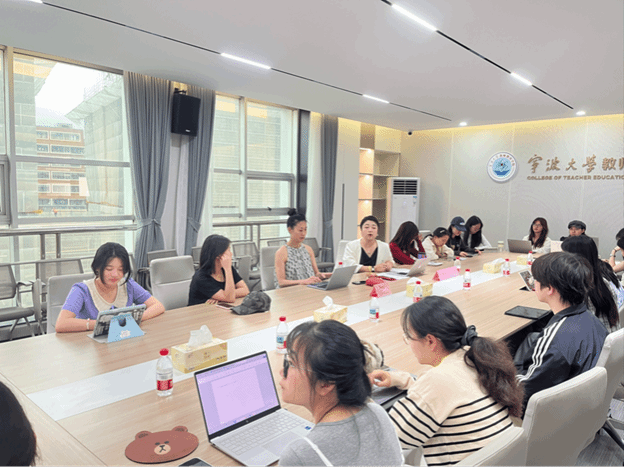
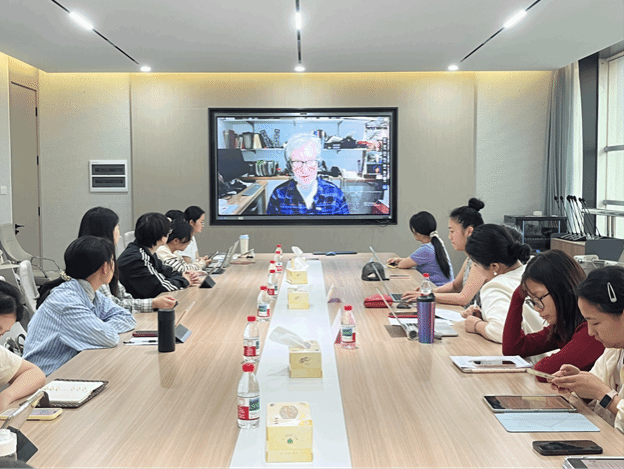
On the morning of May 14, the seventh session of the “Fenghua Scholars Young Scholars Forum” was successfully held in Room 413, Education Building, College of Teacher Education, Ningbo University. The session, themed “Academic Writing and International Publication: A Dialogue with Journal Editors,” featured Associate Professor Rao Limin (phonetic) from the Faculty of Education, McGill University, Canada, as the keynote speaker. It also included an online simultaneous connection with international journal editors, Professor Anila Asghar and Professor Steve, offering faculty and students a hybrid academic sharing session that combined international perspectives with practical guidance. The lecture was moderated by Associate Professor Liu Xin, with faculty and students participating in on‑site discussions.
Associate Professor Rao Limin first introduced her academic background and research interests. She holds a Ph.D. from the University of Toronto and serves as a doctoral supervisor. Her research focuses on teaching practice and teacher education, with particular attention to mathematics and STE(A)M education. In 2023, she received the Faculty of Education’s Distinguished Teaching Award at McGill University. She also serves as the mathematics education editor for the Canadian Journal of Science, Mathematics and Technology Education, and has extensive experience in international journal editing and reviewing.
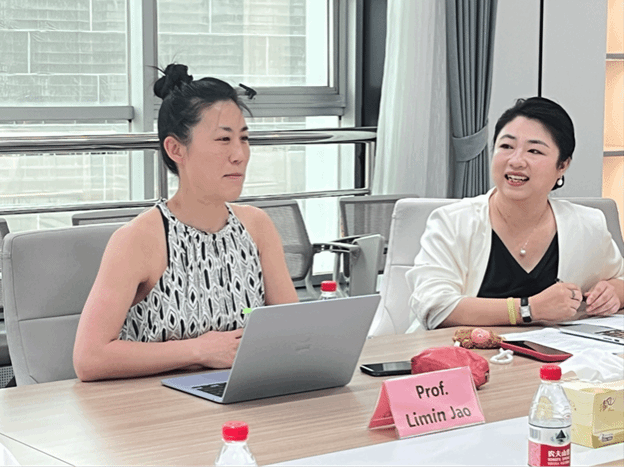
The core segment of the lecture was a dialogue between Professor Rao and the two international journal editors. Professor Anila Asghar and Professor Steve are both senior editorial board members and founding editors of international journals with years of experience in the field of education. Drawing on their extensive experience in journal editing and peer review, the three guests systematically explained the double‑blind peer review mechanism, the functions of editors, and the complete manuscript workflow—from submission, initial review, and external review to revision and acceptance. They focused on analysing the main reasons for desk rejection, including vague research questions, weak connections in the literature review, unclear logical structure, insufficient methodological details, obscure language, and misalignment between the topic and the journal’s scope.
In response to common concerns among faculty and students—such as difficulties in writing literature reviews for niche topics, handling conflicting reviewer comments, AI‑related academic writing ethics, and identifying predatory journals—the three guests offered concrete and actionable advice. They emphasised that a niche topic is not a disadvantage; on the contrary, it may fill an academic gap, and authors can highlight the pioneering value of their research in the manuscript. When faced with divergent reviewer opinions, they suggested creating a comparison table of comments, making reasoned choices, and clearly explaining the rationale in the revision response letter. AI tools should only be used for language polishing and must comply with journal disclosure requirements. Meanwhile, authors should verify journal legitimacy through recognised databases to avoid predatory publishing traps.
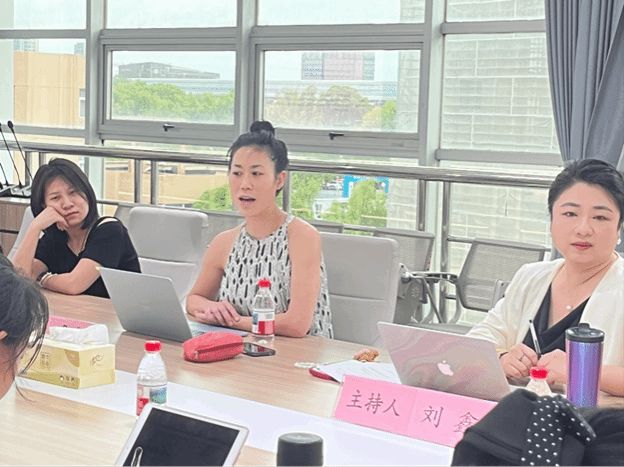
During the interactive session, faculty and students actively raised questions on topics such as English academic writing techniques, transforming course assignments into journal articles, and strategies for submitting to international journals. The three guests patiently answered each question and encouraged students to form academic writing support groups, to accept revisions and rejections as a normal part of the process, and to continuously refine their work to improve the quality of their scholarly output.
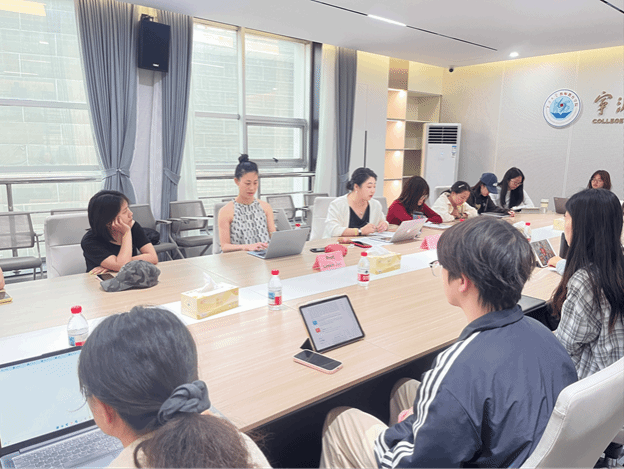
This lecture, delivered in a hybrid format, provided a direct dialogue platform between Ningbo University faculty and students and international journal editors, effectively broadening the international academic horizons of the participants. It also offered significant practical guidance for enhancing the English academic writing skills and international publication capabilities of the entire college community.
【Close 】



